
The 50% Tariff Wake-Up Call: Why Canadian Supply Chains Must Break Free from US Dependency
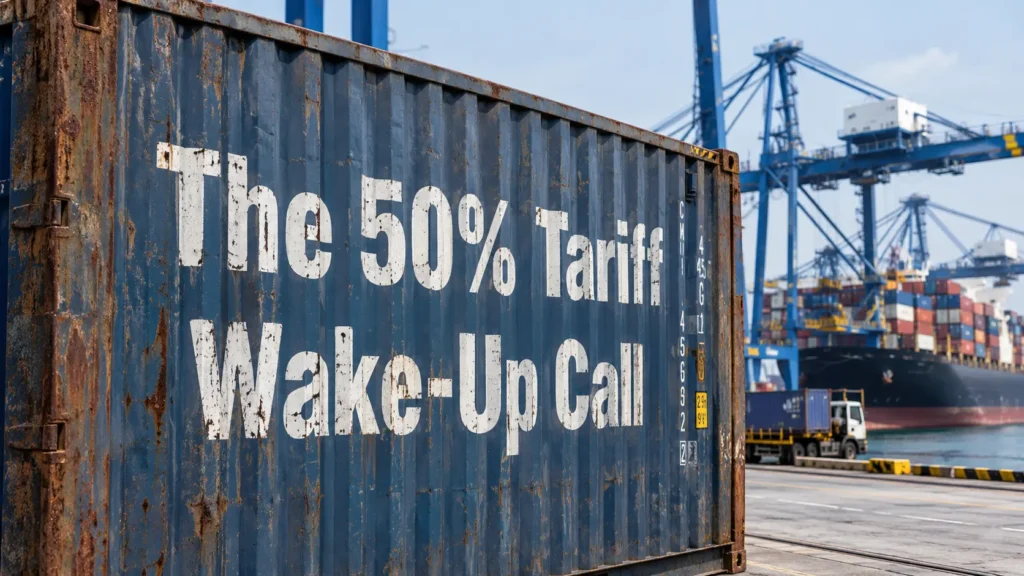
The 50% Tariff Wake-Up Call: Why Canadian Supply Chains Must Break Free from US Dependency 📍 Strategic Advisory Note Authored for Canadian Procurement Managers, Supply Chain Directors, and B2B Decision-Makers navigating North American trade volatility and executing structural supply chain diversification. For decades, Canadian B2B supply chains operated under a comfortable presumption: geographic proximity to the United States guarantees uninterrupted economic stability. Recent political shocks have permanently shattered that illusion. The U.S. administration’s recent imposition of 50% tariffs targets approximately $20 billion worth of Canadian goods, directly affecting products that were previously protected under the USMCA. These levies cover about 5.5% of Canadian exports to the U.S. and arrive as Canada has entered a technical recession. A momentary reprieve is not a long-term business strategy. With the U.S. market becoming increasingly volatile, Canadian enterprises are facing a harsh reality check. In response, the federal government has set an ambitious target to double non-U.S. exports over the next decade, adding roughly $300 billion in annual exports by 2035. Yet, as economic analysts note, trade diversification cannot be achieved through macro trade agreements or a handful of major corporate deals alone. True resilience requires turning national ambition into practical capability for businesses across the country—and crucially, expanding that focus from export promotion to import procurement. The Gravity Trap: Why Canada Remains Tethered Canada’s economic integration with the United States is deeply entrenched. While Canadian exports to the U.S. recently fell slightly from 75.9% to 71.7%, the two economies remain heavily interconnected. Economists measure this structural stickiness through the Gravity Model of International Trade, which demonstrates that bilateral trade volumes scale proportionately with the economic size of a destination country and decline sharply with physical distance. However, comprehensive trade analyses from institutions like the Fraser Institute point out that physical distance is only part of the equation. Up to 90% of the increased costs associated with cross-border trade are driven by non-freight factors known as “dark sources of trade resistance”. These hidden transaction costs stem from divergent legal frameworks, regulatory compliance hurdles, cultural differences, and the heavy sunk capital required to build new business-to-business trust networks. Because of these immense systemic barriers, shifting away from a dominant trading partner is exceptionally difficult. Democratizing Trade and the SME Execution Gap A central flaw in past Canadian trade strategies has been an over-reliance on major corporate players. According to government data, only about 15% of Canadian Small and Medium-sized Enterprises (SMEs) export at all, and of those, 85% ship exclusively to the United States. This means a mere 2% to 3% of Canadian SMEs have meaningful engagement with markets beyond North America. If Canada wants a genuinely resilient economy, it must democratize exporting and provide smaller firms with the enablement and market-entry support required to navigate global markets. On the procurement side, the challenge is identical. Sourcing goods from overseas introduces what supply chain experts call the Execution Gap: The Intermediary Trap: Digital B2B directories are crowded with trading brokers masquerading as primary manufacturers, inflating procurement costs and stripping away direct factory accountability. Quality Fade: Initial prototype samples are frequently pristine, but subsequent high-volume runs can suffer from unannounced material substitutions or rushed finishing unless actively monitored on the ground. Logistical Chokepoints: Overseas supply chains rely heavily on efficient domestic trade-enabling infrastructure. With several Canadian ports ranking poorly on global container efficiency metrics, supply chain managers cannot afford paperwork errors at foreign departure hubs. The Indo-Pacific Pivot and India’s Strategic Role For Canadian businesses looking to secure alternative markets and manufacturing partners, the Indo-Pacific has emerged as the primary growth frontier. Projections indicate that China and India combined will account for roughly 45% of total global economic growth between 2026 and 2030. While China remains a massive trade partner, geopolitical sensitivities present distinct challenges for Western buyers. India, by contrast, represents a highly complementary, market-based anchor. Propelled by an expanding middle class and national manufacturing incentives, India offers a common-law legal environment, transparent corporate structures, and robust intellectual property protections that significantly lower the non-tariff transaction friction plaguing other regions. The Canadian Buyer’s Pre-Procurement Checklist Before issuing international purchase orders or wiring capital overseas, your procurement team should independently verify: ✓ Physical factory audits confirming actual machinery, capacity, and labour standards. ✓ Independent validation of corporate registration, tax standing, and Export-Import (IEC) credentials. ✓ Scheduled pre-shipment inspections (PSI) conducted during active production cycles. ✓ Milestone-based payment contracts that protect your capital against delivery or quality failures. Bridging the Gap: Your On-Ground Advantage in India Navigating international trade diversification requires more than executive intent; it requires specialized, localized execution infrastructure. Canadian businesses do not need to establish expensive foreign subsidiaries to de-risk their supply chains. NorthBridge Trade Partners Inc. acts as your dedicated extension on the ground in India. By bridging the geographical and operational divide, our team handles rigorous supplier vetting, facility audits, milestone contract structuring, and active quality control oversight directly on the factory floor. We eliminate the hidden execution risks, giving Canadian procurement directors the confidence to scale their margins securely. What specific product categories is your organization urgently looking to diversify away from North American single-corridor dependency? Speak With Our Trade Advisory Team Explore how NorthBridge structures risk-free, on-ground procurement support and flexible operational models tailored for North American enterprises. Discuss a Sourcing Requirement Direct Advisory Line: +1 (647) 689-2523